Module 5: Maintenance and Long-Term Care for Implant Success
Introduction
Welcome to Module 5, where we explore the essential maintenance and care protocols that ensure your full-arch dental implants provide decades of successful function. While the surgical placement and osseointegration are critical, long-term success ultimately depends on proper ongoing care—both at home and through professional maintenance.
At St. Louis South Oral & Maxillofacial Surgery, we believe that patient education about maintenance is as important as the surgery itself. Your commitment to proper care directly impacts the longevity and success of your investment. This module combines clinical expertise (The Sage) with supportive guidance (The Healer) to empower you with the knowledge and tools for lifelong implant success.
Learning Objectives
By the end of this module, you will:
- Master proper daily oral hygiene techniques for implants
- Understand professional maintenance requirements and schedules
- Recognize factors that ensure long-term success
- Identify potential complications and prevention strategies
- Commit to lifetime care protocols that protect your investment
5.1 Daily Oral Hygiene Requirements
Essential Daily Care
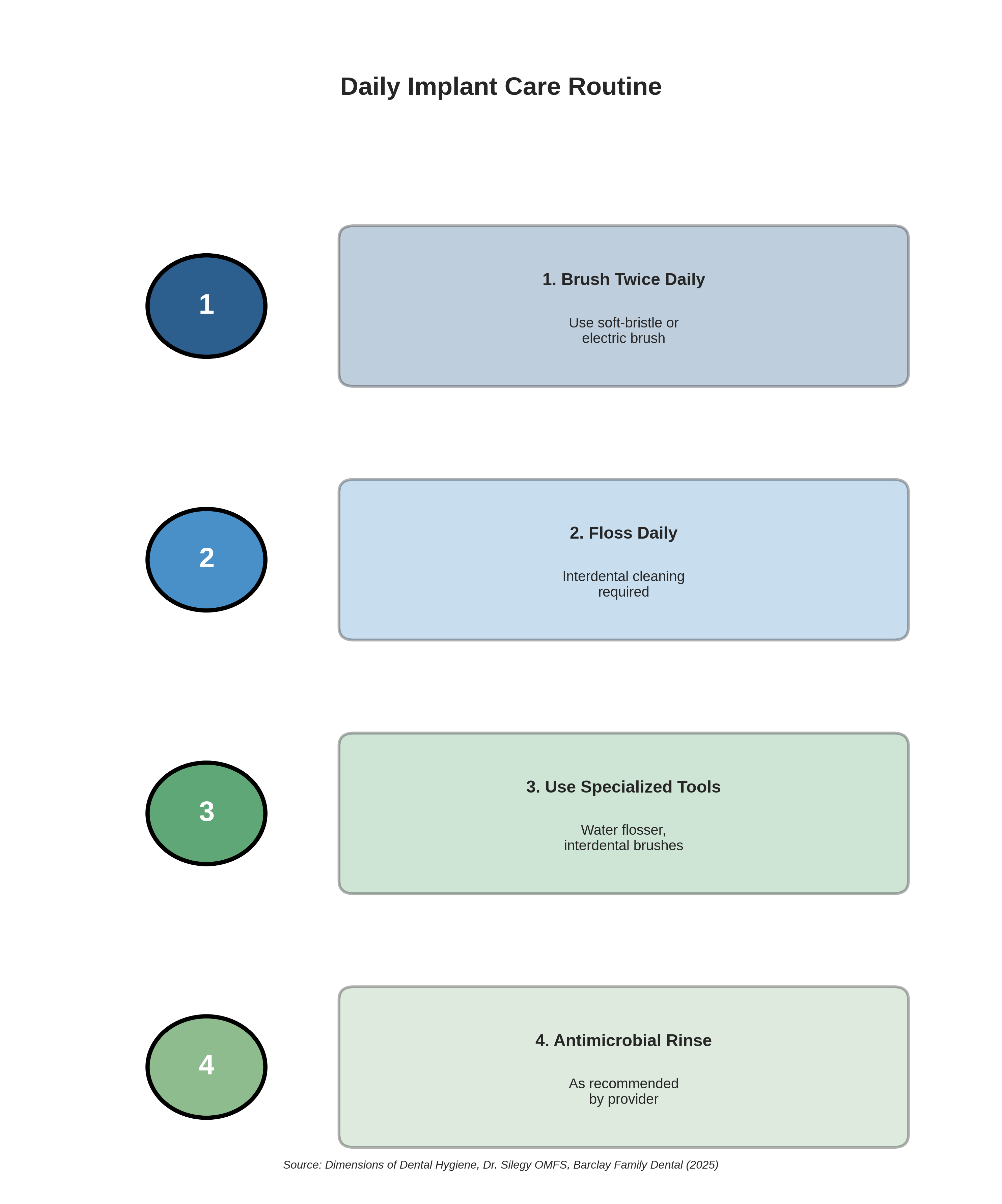
Your daily oral hygiene routine is the foundation of long-term implant success. While full-arch implants function like natural teeth, they require specific care to prevent complications:
Brushing (Minimum Twice Daily):- Use soft-bristle toothbrush or quality electric brush
- Brush all surfaces of prosthesis like natural teeth
- Pay special attention to gum line and implant-prosthesis interface
- Use gentle circular motions
- Spend at least 2 minutes per session
- Morning and evening minimum; after meals ideal
- Essential for removing plaque between teeth and around implants
- Use implant-specific floss, interdental brushes, or water flossers
- Clean thoroughly but gently around each implant site
- Don't skip this step—it's critical for preventing peri-implantitis
- Your surgeon may recommend specific antimicrobial mouth rinses
- Helps reduce bacterial load
- Follow usage instructions carefully
- Not a substitute for brushing and flossing
Peri-implantitis—inflammation around implants similar to gum disease—is the primary cause of implant failure. Daily hygiene prevents bacterial buildup that leads to this condition. Studies show that patients who maintain excellent oral hygiene have significantly better long-term outcomes.
Specialized Cleaning Tools
Effective implant care requires the right tools:
Soft-Bristle or Electric Toothbrushes:- Soft bristles prevent damage to prosthesis and gums
- Electric brushes can be more effective at plaque removal
- Replace brush heads every 3 months
- Choose brushes designed for implants if available
- Small brushes that clean between teeth and around implants
- Various sizes available for different spaces
- Essential for accessing hard-to-reach areas
- Replace when bristles wear
- Highly effective for implant cleaning
- Gentle yet thorough plaque removal
- Excellent for patients with dexterity challenges
- Use on appropriate pressure setting
- Designed to clean around implant abutments
- Thicker and more durable than regular floss
- Some types have stiff ends for easier threading
- Essential tool in your care arsenal
- Tiny brushes for hard-to-reach areas
- Clean around implant posts effectively
- Various sizes and shapes available
- Your hygienist can recommend appropriate types
Proper Cleaning Techniques
Brushing Technique:- Hold brush at 45-degree angle to gum line
- Use gentle circular motions
- Clean all surfaces: outer, inner, chewing
- Pay extra attention to implant-prosthesis junction
- Don't scrub aggressively—gentle is effective
- Ensure you reach all areas, including back teeth
- Use adequate length of floss (18 inches)
- Wrap around fingers for control
- Gently slide between teeth
- Curve around each implant in C-shape
- Move up and down to remove plaque
- Use clean section for each space
- Fill reservoir with lukewarm water
- Start with lowest pressure setting
- Aim tip at gum line at 90-degree angle
- Move systematically around all teeth
- Pause briefly at each implant site
- Gradually increase pressure as comfortable
5.2 Professional Maintenance Schedule
First Year Protocol
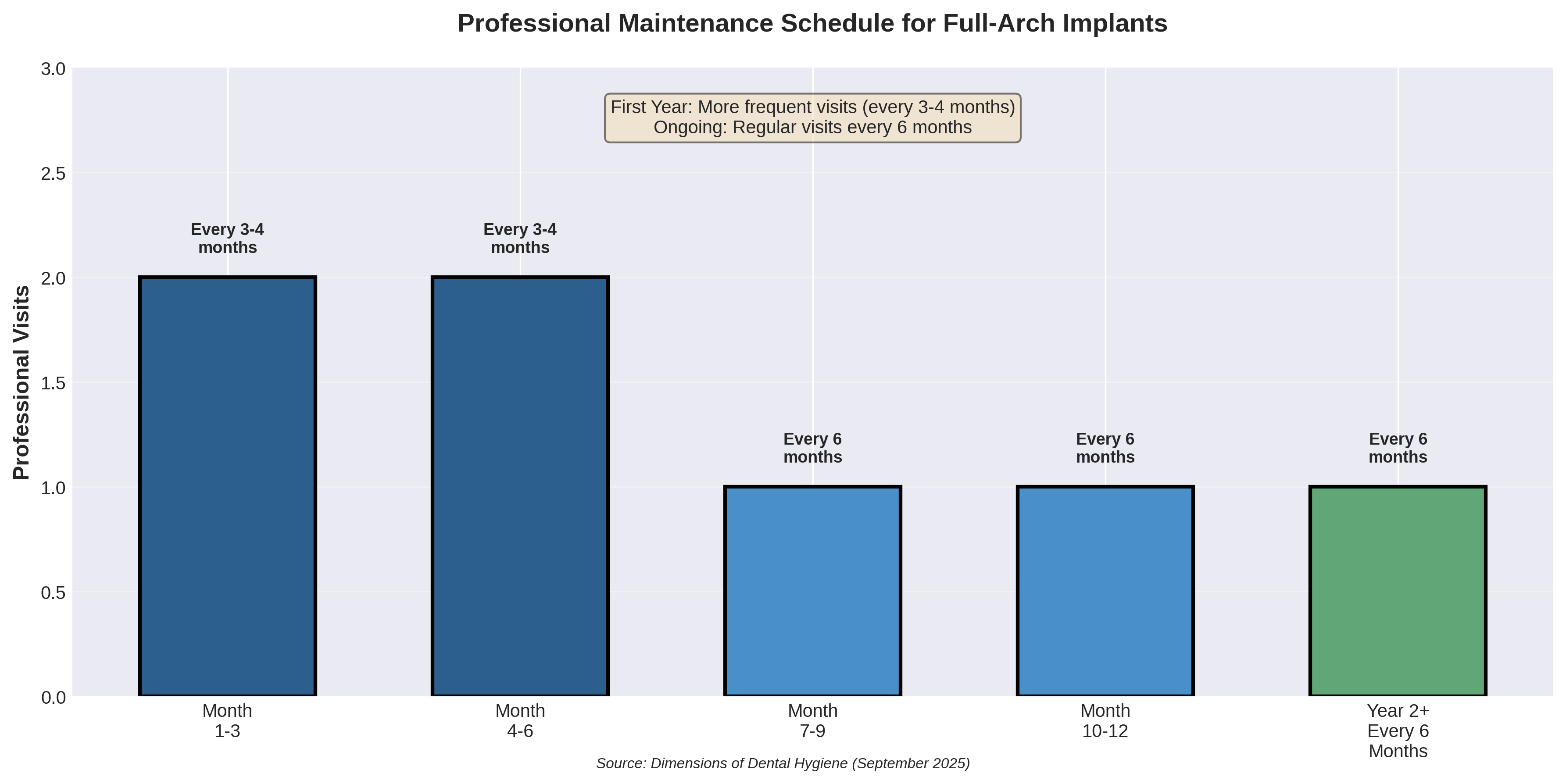
The first year after implant placement requires more frequent monitoring:
Visits Every 3-4 Months:Based on current clinical guidelines from 2025, first-year appointments should occur every 3-4 months. This frequent monitoring serves multiple purposes:
- Close monitoring of healing and integration: Ensuring osseointegration progresses normally
- Early detection of potential complications: Identifying any issues before they become serious
- Prosthetic adjustments as needed: Fine-tuning fit and function
- Reinforcement of home care techniques: Ensuring you're cleaning effectively
- Professional cleaning: Removing any plaque or calculus buildup
- Radiographic assessment: Periodic X-rays to evaluate bone levels
- Comprehensive soft tissue examination
- Implant stability assessment
- Prosthesis condition evaluation
- Professional cleaning with implant-safe instruments
- Bite evaluation and adjustment if needed
- Review of home care effectiveness
- Addressing any patient concerns
Ongoing Maintenance (After First Year)
Regular Check-ups Every 6 Months Minimum:After the critical first year, ongoing maintenance continues every 6 months. This schedule aligns with recommendations from the Dimensions of Dental Hygiene (September 2025) and represents the minimum frequency for most patients.
Professional Maintenance Components: Medical History Review:- Update on any health changes
- New medications or conditions
- Changes in smoking status
- Any systemic health issues
- Examination of gums around implants
- Assessment for inflammation or infection
- Probing depths measurement
- Bleeding evaluation
- Tissue health and color assessment
- Check for wear, chips, or cracks
- Evaluate retention and stability
- Assess for any loosening
- Examine for staining or discoloration
- Verify proper fit
- Removal of plaque and calculus
- Use of implant-safe cleaning instruments
- Polishing of prosthesis
- Antimicrobial treatments if needed
- Thorough cleaning of hard-to-reach areas
- Assessment of how teeth come together
- Identification of any high spots
- Evaluation of wear patterns
- Adjustments if needed
- TMJ assessment
- X-rays to assess bone levels around implants
- Comparison with previous images
- Early detection of bone loss
- Evaluation of implant-bone interface
- Typically annual or as needed
Importance of Compliance
Why Regular Maintenance Matters:Clinical data consistently shows that patients who maintain regular professional care have significantly better long-term outcomes. Professional maintenance:
- Detects problems early when they're easiest to treat
- Removes calculus that home care can't eliminate
- Provides professional assessment of implant health
- Allows for timely interventions if needed
- Extends the lifespan of both implants and prosthesis
- Maintains warranty coverage (many require regular maintenance)
Regular maintenance visits cost $150-$300 per visit. Over a year, this represents $300-$1,200 for recommended care. Compare this to the cost of treating complications from neglect:
- Peri-implantitis treatment: $1,000-$5,000
- Implant replacement: $3,000-$6,000 per implant
- Bone grafting for bone loss: $500-$3,000
- Prosthesis replacement due to damage: $3,000-$8,000
The investment in regular maintenance is minimal compared to the cost of treating preventable problems.
5.3 Long-Term Success Factors
Patient Responsibilities
Long-term implant success depends significantly on patient compliance with care protocols:
Adopt Thorough Oral Hygiene Routine (Critical for Success):This is the single most important factor within your control. Patients who maintain excellent oral hygiene have success rates approaching 98-99%, while those with poor hygiene have significantly higher failure rates.
Daily Requirements:- Brush minimum twice daily (ideally after each meal)
- Floss or use interdental cleaners daily
- Use water flosser if recommended
- Rinse with antimicrobial mouthwash if prescribed
- Spend adequate time on cleaning (5-10 minutes total daily)
Missing scheduled maintenance appointments significantly increases risk of complications. Your professional care team can detect problems you might not notice until they're advanced.
Commitment Required:- First year: Every 3-4 months without exception
- Ongoing: Every 6 months minimum
- Additional visits if problems detected
- Emergency visits for any concerning symptoms
Don't ignore warning signs. Early intervention prevents minor issues from becoming major problems.
Contact Your Surgeon If You Experience:- Bleeding around implants
- Swelling or inflammation
- Pain or discomfort
- Loosening of prosthesis
- Changes in bite
- Any unusual symptoms
Certain habits significantly impact implant longevity:
Smoking (Major Factor):- Dramatically reduces success rates
- Impairs healing and bone integration
- Increases risk of peri-implantitis
- Accelerates bone loss
- Cessation essential for optimal outcomes
- Can damage prosthesis
- May loosen implants over time
- Wear nightguard if you grind
- Stress management helps reduce grinding
- Report grinding to your dentist
- Never use teeth to open packages
- Avoid biting hard objects (ice, pens, fingernails)
- Don't tear tags or open bottles with teeth
- Protect your investment
Your systemic health directly impacts implant success:
Diabetes Management:- Keep HbA1c below 7% if diabetic
- Well-controlled diabetes doesn't significantly impact success
- Uncontrolled diabetes dramatically increases failure risk
- Regular monitoring essential
- Oral health connects to heart health
- Maintain healthy blood pressure
- Follow cardiologist recommendations
- Report any cardiac changes
- Adequate calcium and vitamin D
- Weight-bearing exercise
- Osteoporosis management if applicable
- Discuss bone medications with surgeon
While implants allow you to eat most foods, some precautions protect your investment:
Foods to Enjoy:- Fresh fruits and vegetables
- Proteins (meat, fish, poultry)
- Whole grains
- Dairy products
- Most normal foods
- Very hard foods (hard candy, ice)
- Extremely sticky foods (caramels, taffy)
- Foods requiring excessive force
- Anything that could damage prosthesis
The Role of Smoking Cessation
Smoking is one of the most significant modifiable risk factors for implant failure:
Impact of Smoking:- Reduces blood flow to healing tissues
- Impairs immune response
- Increases infection risk
- Accelerates bone loss around implants
- Significantly reduces success rates
- Increases peri-implantitis risk
- Non-smokers: 95-98% success
- Smokers: 85-90% success (significantly lower)
- Heavy smokers: Even lower success rates
- Improved healing
- Better long-term outcomes
- Reduced complication risk
- Better overall health
- Cost savings from avoiding complications
- Smoking cessation programs
- Nicotine replacement therapy
- Prescription medications (Chantix, Wellbutrin)
- Support groups
- Counseling services
5.4 Potential Complications and Prevention
Early-Stage Complications
These occur in the immediate postoperative period:
Infection at Surgical Site:- Symptoms: Increased pain, swelling, fever, discharge
- Prevention: Antibiotics, proper post-op care, good hygiene
- Treatment: Additional antibiotics, possible drainage
- Incidence: Rare with proper protocols
- Symptoms: Continued bleeding beyond normal
- Prevention: Proper surgical technique, medication management
- Treatment: Pressure, medications, rarely surgical intervention
- Incidence: Uncommon
- Symptoms: Numbness, tingling, altered sensation
- Prevention: Careful planning with CBCT, precise placement
- Treatment: Usually resolves over time, rarely permanent
- Incidence: Very rare with modern planning
- Symptoms: Sinus pressure, drainage
- Prevention: Careful surgical technique, proper planning
- Treatment: Usually heals naturally, rarely requires intervention
- Incidence: Rare with experienced surgeons
- Symptoms: Implant movement
- Prevention: Proper site preparation, adequate bone quality
- Treatment: May require implant removal and replacement
- Incidence: Uncommon with proper technique
Late-Stage Complications
These arise during or after the osseointegration process:
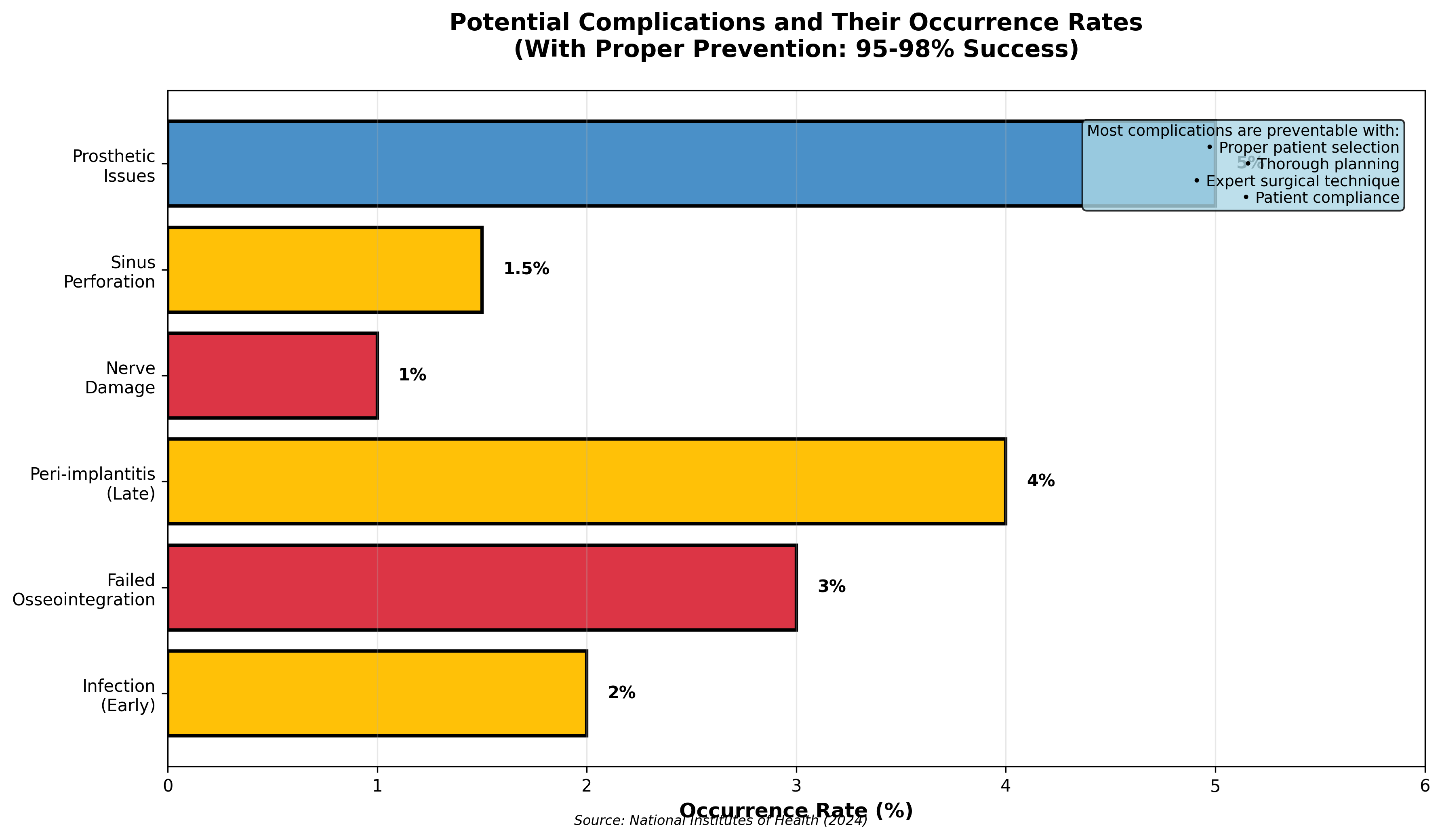
Failed Osseointegration:- Symptoms: Implant mobility, pain
- Causes: Poor bone quality, infection, inadequate healing
- Prevention: Proper patient selection, surgical technique
- Treatment: Implant removal, healing, possible replacement
- Incidence: 2-5% of implants
- Definition: Inflammation around implant similar to gum disease
- Symptoms: Bleeding, swelling, bone loss, possible pain
- Causes: Poor oral hygiene, bacterial infection
- Prevention: Excellent daily care, regular professional maintenance
- Treatment: Deep cleaning, antibiotics, possible surgery
- Incidence: 10-20% of implants over 5-10 years (preventable)
- Symptoms: Often asymptomatic initially, detected on X-rays
- Causes: Peri-implantitis, excessive forces, poor hygiene
- Prevention: Good hygiene, regular maintenance, proper loading
- Treatment: Depends on extent; may require grafting
- Incidence: Minimal with proper care
- Symptoms: Implant feels loose
- Causes: Failed integration, bone loss, excessive forces
- Prevention: Proper surgical technique, good maintenance
- Treatment: Often requires implant removal
- Incidence: Rare with proper care
- Types: Chips, cracks, screw loosening, wear
- Causes: Excessive forces, accidents, normal wear
- Prevention: Nightguard if grinding, avoid hard foods
- Treatment: Repair or replacement depending on damage
- Incidence: Occasional over years of use
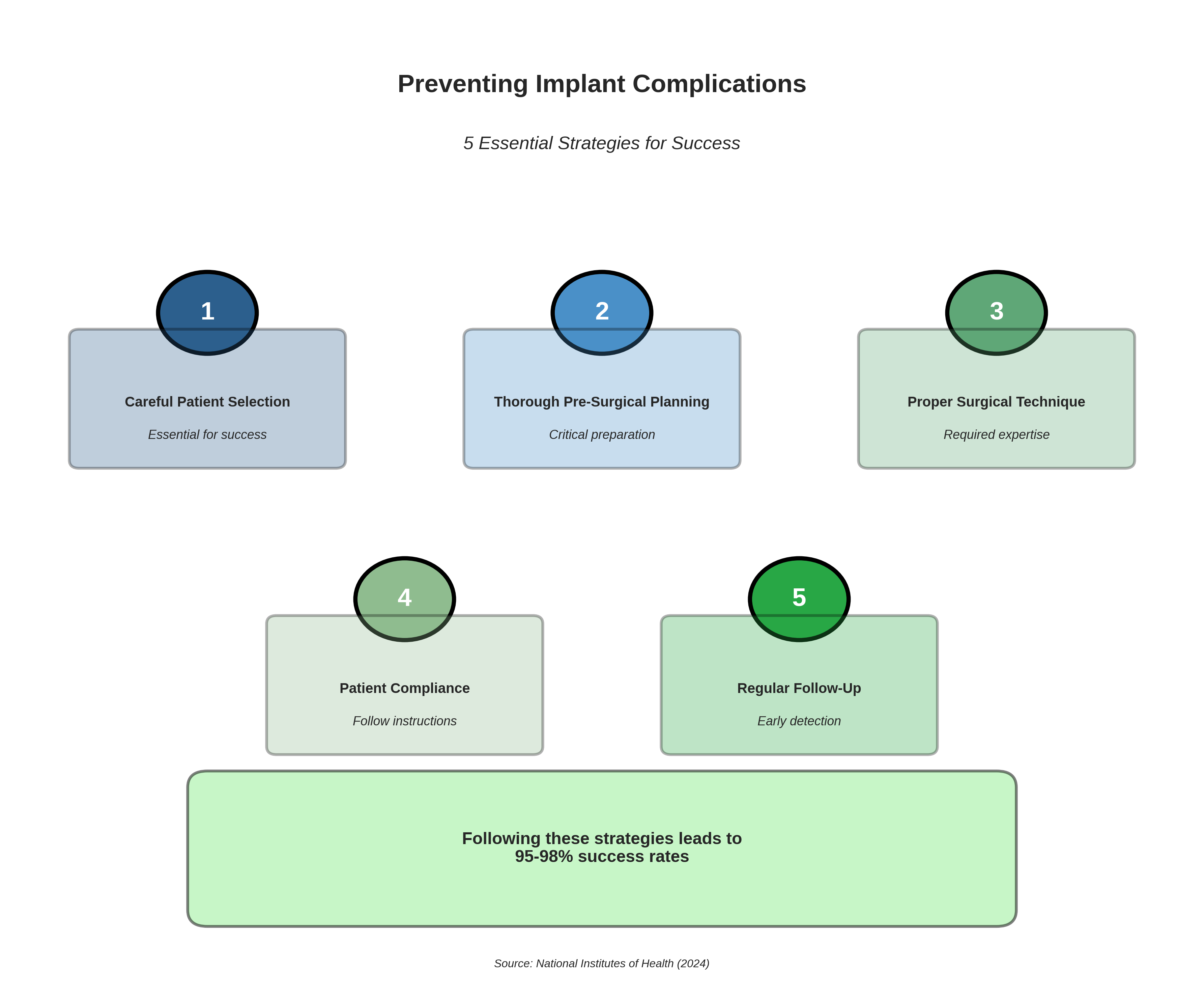
Prevention Strategies
Careful Patient Selection (Essential):- Thorough medical evaluation
- Assessment of risk factors
- Optimization of health before surgery
- Realistic expectations
- Commitment to maintenance
- CBCT imaging and analysis
- Virtual implant placement
- Identification of anatomical structures
- Anticipation of challenges
- Backup plans for complications
- Experienced surgeon
- Precise implant placement
- Adequate primary stability
- Minimally invasive approach
- Sterile technique
- Follow all instructions carefully
- Take medications as prescribed
- Maintain soft diet during healing
- Attend all follow-up appointments
- Report any concerns promptly
- Scheduled maintenance visits
- Professional monitoring
- Early problem identification
- Timely interventions
- Long-term relationship with care team
5.5 Longevity and Prosthesis Care
Implant Longevity
Can Last Lifetime with Proper Care:The titanium implants themselves, when properly integrated and maintained, can last for your entire lifetime. Clinical studies show 90-98% survival rates over 10-15 years, and many implants function successfully for 20, 30, or more years.
Factors Affecting Implant Longevity:- Quality of initial integration
- Patient oral hygiene compliance
- Regular professional maintenance
- Absence of harmful habits (smoking, grinding)
- Overall health maintenance
- Proper loading and force distribution
Prosthesis Longevity
May Need Replacement in 10-15 Years:While implants can last a lifetime, the prosthetic teeth typically need replacement after 10-15 years due to normal wear and tear.
Factors Affecting Prosthesis Lifespan: Material Type:- Zirconia: 15-20+ years typical
- Acrylic: 10-15 years typical
- Hybrid materials: 12-18 years typical
- Bite force intensity
- Dietary habits
- Grinding or clenching
- Accident or trauma
- Regular professional care
- Proper home cleaning
- Timely repairs
- Protective measures (nightguard)
- Visible wear on chewing surfaces
- Chips or cracks
- Staining that can't be removed
- Changes in fit
- Aesthetic concerns
- Functional problems
Signs to Watch For
Contact your oral surgeon if you notice:
Loosening of Prosthesis:- Prosthesis feels mobile
- Clicking or movement when chewing
- Changes in stability
- Action: Schedule appointment promptly
- Teeth don't come together properly
- New high spots or interferences
- Jaw discomfort
- Action: Needs professional adjustment
- Pain around implants
- Pressure or soreness
- Persistent discomfort
- Action: Don't ignore—call your surgeon
- Bleeding when brushing
- Red, swollen gums
- Pus or discharge
- Action: May indicate peri-implantitis—seek care
- Bad taste or odor
- Sensitivity
- Visible changes
- Action: Better to check than ignore
Key Takeaways
- Daily oral hygiene is critical for implant success - Brushing twice daily and daily flossing/interdental cleaning prevent peri-implantitis, the primary cause of implant failure.
- First year requires visits every 3-4 months; ongoing maintenance every 6 months minimum - Regular professional care detects problems early and extends implant lifespan.
- Patient compliance is the #1 factor in long-term success - Your commitment to home care and professional maintenance directly determines outcomes.
- Smoking cessation is a major factor in outcomes - Smoking significantly reduces success rates and increases complications; cessation is essential.
- Implants can last a lifetime with proper care - The titanium implants themselves can function for decades when properly maintained.
- Prosthesis may need replacement in 10-15 years - Normal wear requires prosthesis replacement, though implants remain stable.
- Early detection prevents major problems - Regular monitoring and prompt attention to concerns prevent minor issues from becoming serious.
- Prevention is far less expensive than treatment - Regular maintenance costs are minimal compared to treating complications from neglect.
Reflection Questions
- How will you incorporate implant-specific cleaning into your daily routine?
- What strategies will help you maintain regular professional maintenance appointments?
- If you smoke, what resources and support do you need to quit?
- How can you optimize your overall health to support implant longevity?
Looking Ahead
In Module 6, we'll explore the advanced technologies transforming full-arch implant dentistry, including digital workflows, CBCT imaging, computer-guided surgery, 3D printing, artificial intelligence, and emerging robotic systems. Understanding these technologies helps you appreciate the precision and predictability of modern implant treatment.
Visual Content Placeholders
[INFOGRAPHIC: Daily Care Routine - Step-by-step visual guide to proper implant cleaning]
[IMAGES: Specialized Cleaning Tools - Photos of interdental brushes, water flossers, implant floss]
[CALENDAR: Maintenance Schedule - First year (every 3-4 months) vs. ongoing (every 6 months)]
[FLOWCHART: Complication Prevention - Decision tree for preventing and addressing complications]
[DIAGRAMS: Proper Brushing and Flossing Techniques - Illustrated guide to effective cleaning]
[CHART: Success Rates by Compliance Level - Visual showing impact of maintenance on outcomes]
[TABLE: Warning Signs and Actions - Comprehensive guide to symptoms and appropriate responses]
Module 5 Complete Continue to Module 6: Advanced Technology in Full-Arch Implant Dentistry