Module 1: Understanding Full-Arch Dental Implants
Introduction
Welcome to the first module of our comprehensive course on full-arch dental implants. Whether you're a patient exploring your options for complete tooth replacement, a referring dentist seeking to better serve your patients, or a healthcare professional expanding your knowledge, this module establishes the foundational understanding you need to make informed decisions about full-arch dental implant rehabilitation.
At St. Louis South Oral & Maxillofacial Surgery, we believe that knowledge empowers healing. Our approach combines clinical expertise with compassionate care, ensuring that every patient understands not just the "what" of their treatment, but the "why" and "how" as well.
Learning Objectives
By the end of this module, you will be able to:
- Define full-arch dental implant rehabilitation and understand its clinical applications
- Distinguish between full-arch implants and other tooth replacement options
- Identify ideal candidates for full-arch implant treatment
- Appreciate the transformative impact of full-arch restoration on quality of life
- Understand success rates and long-term outcomes based on current clinical evidence
1.1 What Are Full-Arch Dental Implants?
Definition and Clinical Overview
Full-arch dental implant rehabilitation represents one of the most significant advances in modern dentistry. This comprehensive treatment approach replaces an entire arch of missing or failing teeth using strategically placed dental implants to support a fixed prosthesis. Unlike traditional dentures that rest on the gums or individual implants that replace single teeth, full-arch implants provide a permanent, stable foundation for a complete set of teeth.
The procedure involves placing multiple dental implants—typically four to six—into the jawbone, which then support a custom-designed prosthesis that functions and appears like natural teeth. This approach has revolutionized the lives of patients who have lost most or all of their teeth, offering a solution that restores not just function, but confidence and quality of life.
The All-on-X Treatment Concept
The most prominent approach to full-arch rehabilitation is known as the "All-on-X" treatment concept. This innovative technique, developed and refined over the past two decades, allows an entire arch of teeth to be supported by a specific number of strategically placed implants. The "X" in All-on-X refers to the number of implants used—most commonly four (All-on-4) or six (All-on-6).
What makes this approach revolutionary is its efficiency and effectiveness. Rather than requiring an individual implant for each missing tooth, the All-on-X concept uses fewer implants placed at precise angles to maximize support and stability. This strategic placement often eliminates the need for extensive bone grafting procedures, making treatment accessible to more patients.
How Full-Arch Implants Differ from Other Options
Understanding how full-arch implants compare to other tooth replacement options helps clarify why this treatment has become the gold standard for complete tooth replacement:
Compared to Traditional Dentures:- Full-arch implants are permanently fixed in place, while dentures are removable
- Implants preserve jawbone structure; dentures allow progressive bone loss
- Implants provide superior chewing efficiency and bite force
- No slipping, clicking, or need for adhesives with implants
- Implants allow unrestricted diet; dentures require dietary limitations
- Full-arch implants replace all teeth with 4-6 implants; individual replacement would require 10-14 implants per arch
- More cost-effective for complete tooth replacement
- Shorter treatment timeline
- Single comprehensive treatment plan
- Full-arch implants are fixed and non-removable
- Implant-supported dentures may still be removable
- Fixed implants provide superior stability and function
- Different maintenance requirements
Fixed vs. Removable Prosthetic Options
Full-arch dental implant treatment offers different prosthetic configurations:
Fixed Prostheses (Most Common):These are permanently attached to the implants and can only be removed by your dental professional during maintenance appointments. Fixed prostheses offer the most natural feel and function, allowing you to care for them just like natural teeth through regular brushing and flossing.
Removable Prostheses:Some patients may opt for implant-supported overdentures, which snap onto the implants but can be removed for cleaning. While less common in full-arch rehabilitation, this option may be appropriate for specific clinical situations or patient preferences.
1.2 Who Benefits from Full-Arch Implants?
Ideal Candidates for Full-Arch Rehabilitation
Full-arch dental implants transform lives for a diverse range of patients. Understanding who benefits most from this treatment helps set appropriate expectations and ensures optimal outcomes.
Patients Missing Most or All Teeth:The most obvious candidates are individuals who have lost most or all of their teeth in one or both dental arches. Whether tooth loss resulted from decay, periodontal disease, trauma, or congenital conditions, full-arch implants provide a comprehensive solution that restores complete function.
Individuals with Failing Dentition:Many patients face a situation where their remaining teeth are failing due to advanced decay, severe periodontal disease, or structural damage. Rather than attempting to save compromised teeth that will likely fail in the near future, full-arch rehabilitation offers a definitive, long-term solution. This proactive approach can actually be more cost-effective and less stressful than years of ongoing dental problems.
Denture Wearers Seeking Improved Function:Current denture wearers often struggle with common frustrations: dentures that slip during eating or speaking, dietary restrictions due to poor chewing efficiency, social anxiety about denture movement, and the ongoing inconvenience of denture maintenance. For these patients, full-arch implants represent a life-changing upgrade that eliminates these daily challenges.
Patients Experiencing Bone Loss:When natural teeth are lost, the jawbone that once supported them begins to resorb or shrink. This progressive bone loss leads to changes in facial structure, including a collapsed or aged appearance, difficulty fitting dentures, and further oral health complications. Full-arch implants halt this process by providing the stimulation that bone needs to maintain its volume and density.
Quality of Life Considerations
The decision to pursue full-arch implants extends far beyond clinical considerations. The impact on daily life and overall well-being cannot be overstated:
Functional Restoration:Patients regain the ability to eat a full, nutritious diet without restrictions. Foods that were impossible with dentures or missing teeth—crisp vegetables, fresh fruits, proteins—become enjoyable again. This dietary freedom directly impacts overall health and nutrition.
Social and Psychological Benefits:The confidence that comes with a secure, natural-looking smile affects every aspect of life. Patients report feeling more comfortable in social situations, more confident in professional settings, and more willing to engage in activities they had avoided. The psychological burden of worrying about tooth appearance or denture movement is lifted.
Long-Term Health Impact:Proper nutrition, maintained through the ability to chew effectively, contributes to better overall health. Additionally, preserving jawbone structure maintains facial aesthetics and prevents the cascade of problems associated with bone loss.
Physical and Health Requirements
While full-arch implants benefit many patients, certain health and physical factors determine candidacy:
Good Overall Health:Candidates should be in reasonably good general health. The body's ability to heal and integrate the implants depends on overall health status. This doesn't mean you must be in perfect health, but major systemic conditions should be well-managed.
Adequate Bone Structure:Sufficient bone density and volume are necessary to support the implants. However, even patients with some bone loss may be candidates, as preparatory procedures like bone grafting can create the necessary foundation. Advanced imaging technology allows precise assessment of bone quality and quantity.
Commitment to Oral Hygiene:Long-term success requires dedication to proper oral hygiene and regular professional maintenance. Candidates must be willing to commit to daily care routines and scheduled follow-up appointments.
Realistic Expectations:Understanding what full-arch implants can and cannot achieve is essential. While outcomes are typically excellent, having realistic expectations about the process, timeline, and results ensures satisfaction.
1.3 Patient Satisfaction and Outcomes
Remarkable Satisfaction Rates
One of the most compelling aspects of full-arch dental implant treatment is the extraordinarily high level of patient satisfaction. Current clinical data from 2025 reveals satisfaction rates that exceed most medical and dental procedures:
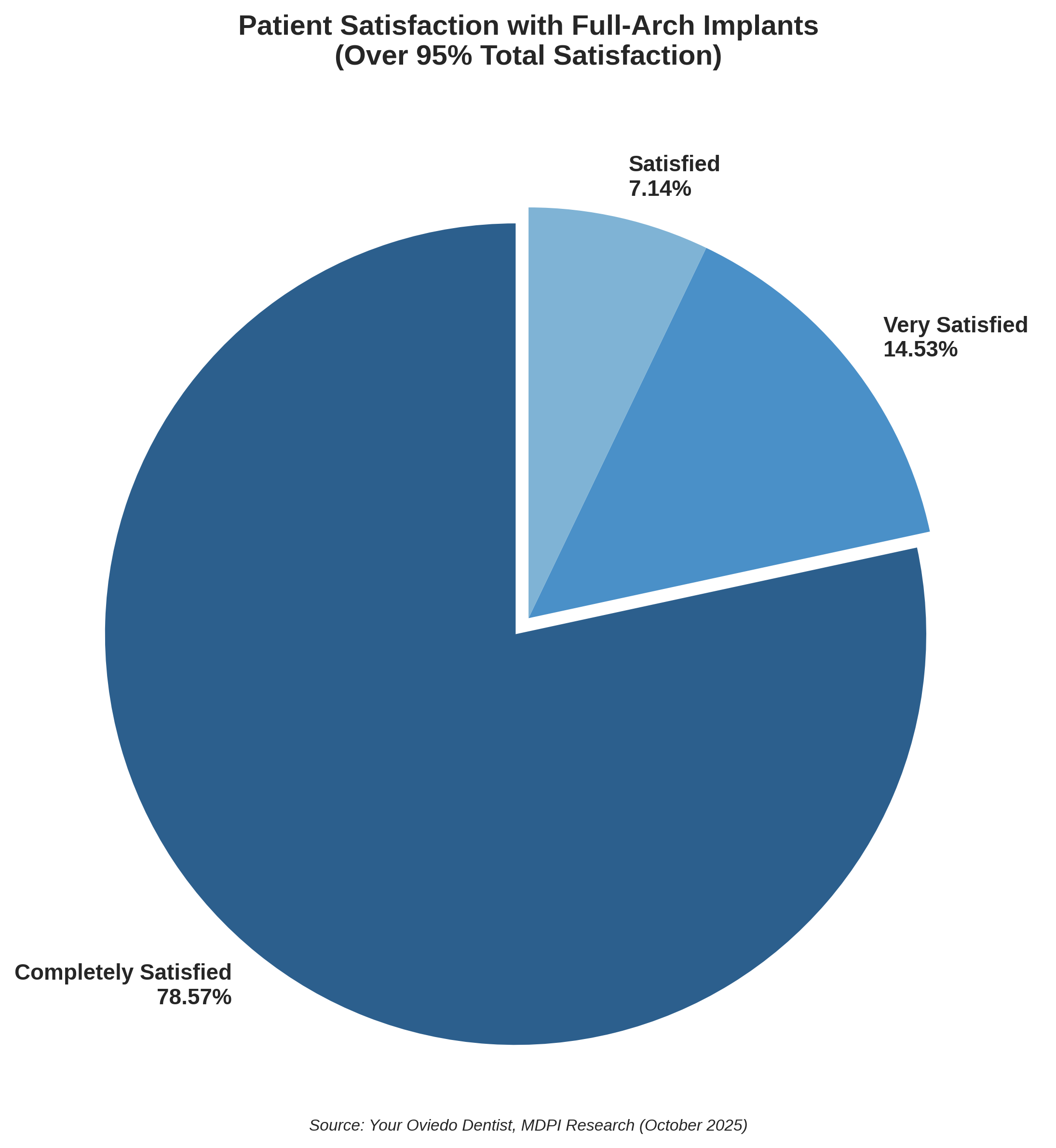
Overall Satisfaction Statistics:- 78.57% of patients report being completely satisfied with their full-arch implants
- 14.53% report being very satisfied
- 7.14% report being satisfied
- Over 95% of patients achieve satisfaction levels of "satisfied" or higher
These numbers tell a powerful story: the vast majority of patients who undergo full-arch implant treatment are not just satisfied—they're thrilled with their results.
Specific Areas of Improvement
Patient satisfaction extends across multiple dimensions of daily life:
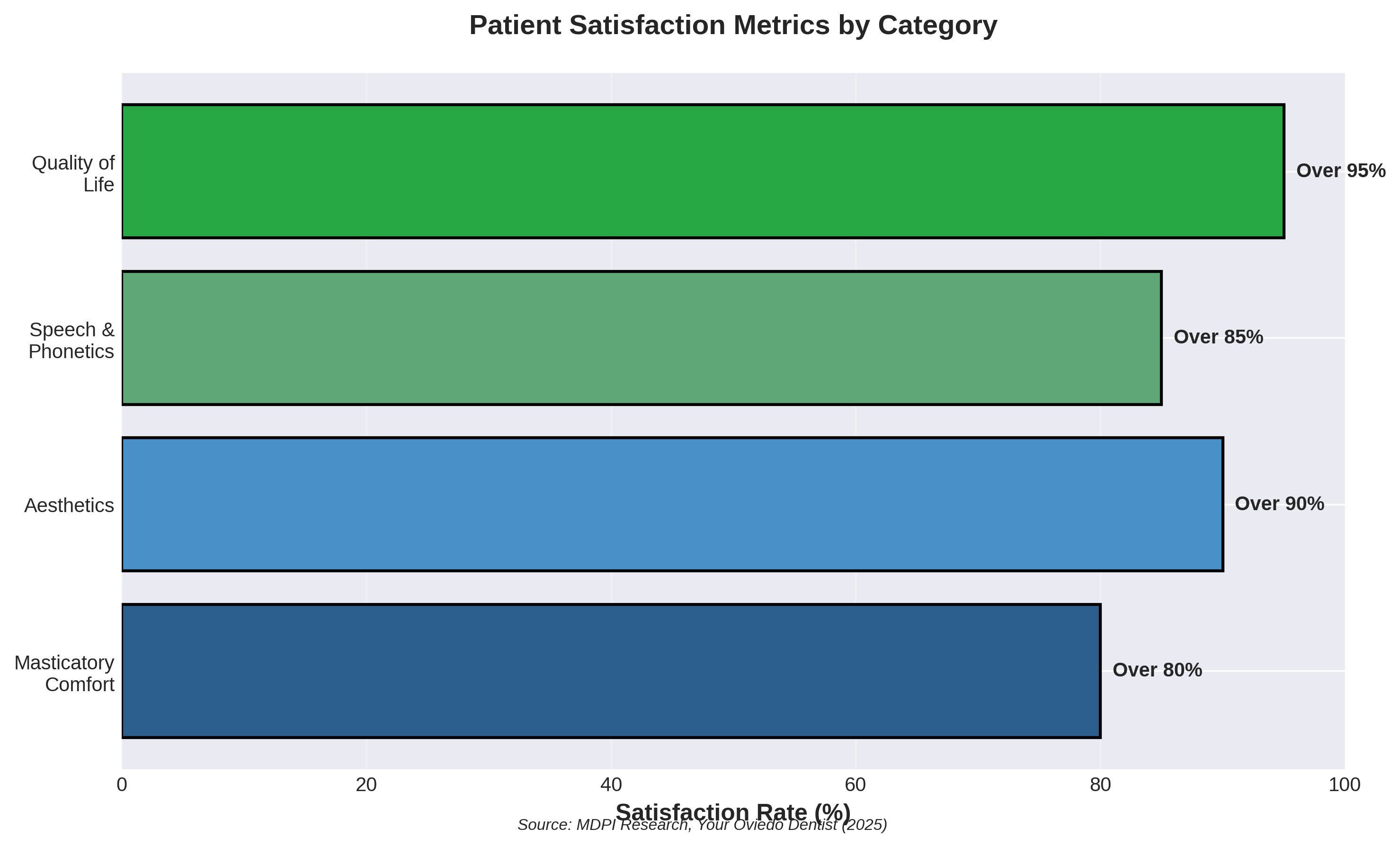
Masticatory Comfort (Chewing Function):Over 80% of patients report high satisfaction with their ability to chew comfortably. This represents a dramatic improvement over dentures or compromised natural teeth. Patients describe being able to eat foods they hadn't enjoyed in years, from fresh apples to steaks, without pain or difficulty.
Aesthetic Satisfaction:Over 90% of patients express high satisfaction with the appearance of their new smile. Modern prosthetic materials and design techniques create results that look natural and complement each patient's facial features. The psychological impact of feeling confident about your smile cannot be overstated.
Speech and Phonetics:Over 85% of patients report satisfaction with speech clarity and phonetics. Unlike traditional dentures, which can affect pronunciation and cause clicking sounds, properly designed full-arch implants allow natural speech patterns. The adjustment period is typically brief, and most patients quickly adapt to speaking naturally with their new teeth.
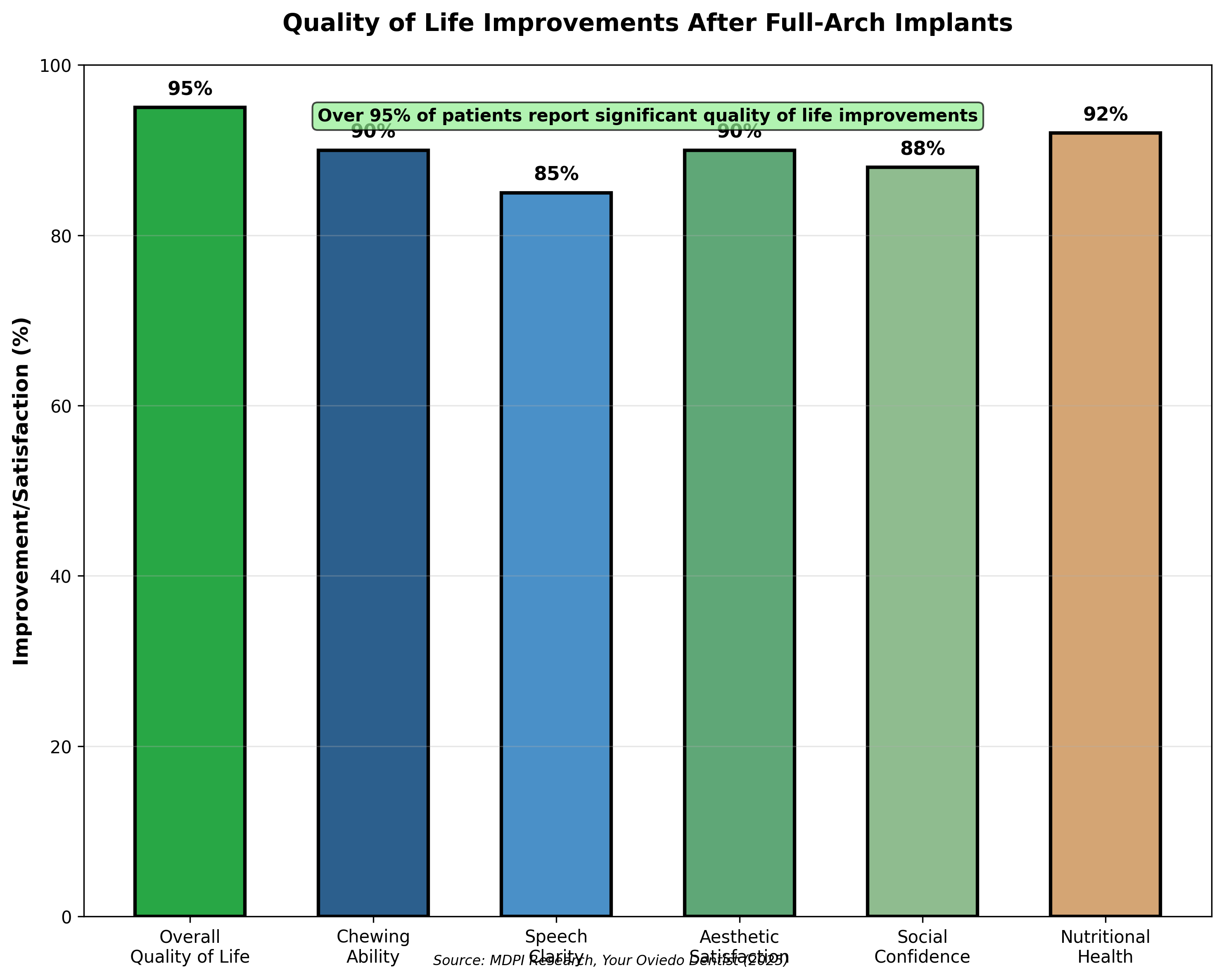
Overall Quality of Life:Perhaps most significantly, over 95% of patients report improvement in their overall quality of life. This encompasses all aspects of daily living—from nutrition and health to social interactions and self-confidence. The transformative nature of full-arch implant treatment extends far beyond the mouth.
Real Patient Experiences
While statistics provide important evidence, the real stories of transformation bring these numbers to life:
Functional Transformation:Patients consistently report the joy of eating meals with family and friends without worry or embarrassment. The simple pleasure of biting into fresh fruit, enjoying a meal at a restaurant, or not having to cut food into tiny pieces represents a return to normalcy that many had forgotten.
Aesthetic Confidence:The psychological impact of a restored smile affects every interaction. Patients describe feeling years younger, more attractive, and more willing to smile freely in photographs and social situations. This renewed confidence often extends to professional opportunities and personal relationships.
Improved Phonetics:Clear speech without the interference of ill-fitting dentures or gaps from missing teeth allows patients to communicate effectively and confidently. This is particularly important for professionals who speak publicly or anyone who values clear communication.
Psychological Well-Being:The relief from constant worry about tooth problems, denture movement, or smile appearance contributes to reduced stress and improved mental health. Patients often describe feeling liberated from the burden they had carried for years.
1.4 Success Rates and Long-Term Outcomes
Evidence-Based Success Rates
When considering any medical or dental procedure, understanding success rates based on clinical evidence is essential. Full-arch dental implants have been extensively studied, and the data is remarkably positive:
Overall Success Rates:Current research from 2025 indicates that full-arch dental implants achieve:
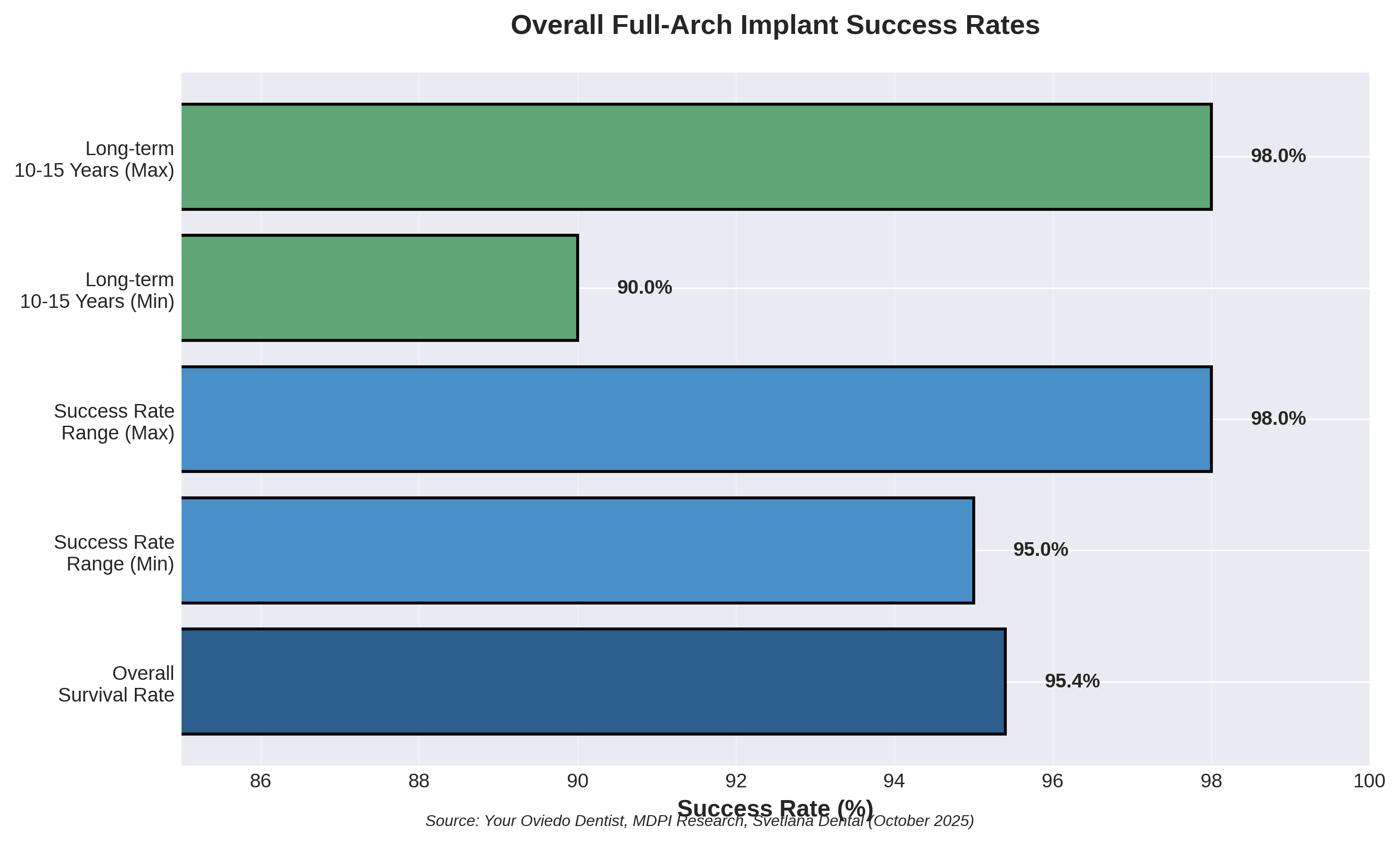
- 95.4% estimated survival rate for full-arch restorations
- 95-98% success rate when performed by skilled oral surgery professionals
- 90-98% long-term survival rates over 10-15 years
These success rates place full-arch implants among the most predictable and successful procedures in dentistry. To put this in perspective, these outcomes compare favorably with many other well-established medical treatments.
Understanding Success Metrics
It's important to understand what "success" means in the context of dental implants:
Survival Rate:This refers to the implant remaining in place and functional. A survival rate of 95-98% means that the vast majority of implants successfully integrate with the bone and continue to function as intended.
Success Rate:Success encompasses not just survival, but also the absence of complications, maintenance of bone levels, healthy surrounding tissues, and patient satisfaction. Different classification systems (such as the Misch and Albrektsson classifications) may define success slightly differently, which explains some variation in reported success rates.
Long-Term Outcomes:The 10-15 year data is particularly important because it demonstrates that full-arch implants are not just a short-term solution—they provide lasting results. While the prosthetic teeth may need replacement after 10-15 years due to normal wear, the implants themselves typically remain stable and functional for life.
Factors Affecting Success and Longevity
Understanding what contributes to successful outcomes helps patients maximize their chances of long-term success:
Surgeon Experience and Skill:The expertise of your oral surgeon significantly impacts outcomes. Experienced surgeons who specialize in full-arch rehabilitation bring refined techniques, advanced technology, and comprehensive treatment planning that optimize results.
Patient Selection:Careful evaluation of candidacy ensures that patients who proceed with treatment have the best chance of success. This includes assessing overall health, bone quality, lifestyle factors, and commitment to maintenance.
Bone Quality and Quantity:The foundation for implant success is adequate bone structure. Advanced imaging technology allows precise assessment, and preparatory procedures can enhance bone quality when needed.
Surgical Technique:Modern surgical protocols, including computer-guided surgery and minimally invasive approaches, enhance precision and reduce complications. The use of advanced technology contributes to the high success rates seen today.
Prosthetic Design:The design and fabrication of the prosthesis affects both function and longevity. High-quality materials and precise engineering ensure optimal load distribution and durability.
Patient Compliance:Long-term success depends significantly on patient commitment to oral hygiene and regular professional maintenance. Patients who follow recommended care protocols experience the best outcomes.
Lifestyle Factors:Smoking significantly reduces success rates and should be avoided. Other factors like teeth grinding (bruxism) may require management through protective devices. Overall health maintenance, including management of conditions like diabetes, supports implant success.
Comparison with Alternative Treatments
When evaluating full-arch implants, it's helpful to compare outcomes with alternative treatments:
Versus Traditional Dentures:While dentures have lower upfront costs, they don't prevent bone loss, require periodic replacement (typically every 5-7 years), and provide lower patient satisfaction. Full-arch implants, despite higher initial investment, offer superior long-term outcomes and patient satisfaction.
Versus Individual Implants:For patients missing all teeth, placing individual implants for each tooth would be prohibitively expensive and involve extensive surgery. Full-arch implants provide comparable function and aesthetics with fewer implants, reduced cost, and shorter treatment time.
Long-Term Value:When considering the longevity of full-arch implants (potentially lifetime with proper care) versus the need to replace dentures every 5-7 years, the long-term value proposition of implants becomes clear. Additionally, the quality of life benefits and health advantages add value that extends beyond simple cost comparison.
Key Takeaways
As we conclude Module 1, let's review the essential concepts:
- Full-arch dental implants provide a permanent, stable solution for complete tooth replacement, using strategically placed implants to support a fixed prosthesis that functions like natural teeth.
- Patient satisfaction exceeds 95% across multiple quality measures, including chewing function, aesthetics, speech, and overall quality of life. This represents one of the highest satisfaction rates in dentistry.
- Success rates of 95-98% demonstrate proven clinical effectiveness, with long-term survival rates of 90-98% over 10-15 years. These outcomes place full-arch implants among the most predictable dental procedures.
- Treatment transforms both function and quality of life, restoring the ability to eat a full diet, speak clearly, and smile confidently. The psychological and social benefits extend far beyond the clinical outcomes.
- Ideal candidates include patients missing most or all teeth, those with failing dentition, denture wearers seeking improved function, and individuals experiencing bone loss. Good overall health and commitment to maintenance are important factors.
- The All-on-X concept (typically All-on-4 or All-on-6) represents the most common approach, offering efficiency and effectiveness through strategic implant placement.
- Long-term success depends on multiple factors, including surgeon expertise, patient selection, surgical technique, prosthetic design, and patient compliance with maintenance protocols.
Reflection Questions
To deepen your understanding of this module's content, consider these questions:
- How do full-arch dental implants differ from traditional dentures in terms of function, maintenance, and long-term outcomes?
- What aspects of patient satisfaction data do you find most compelling, and why?
- How do the success rates of full-arch implants compare to your expectations before starting this module?
- What factors contributing to long-term success are within patient control, and which require professional expertise?
Looking Ahead
In Module 2, we'll explore the specific techniques used in full-arch rehabilitation—All-on-4 and All-on-6—examining how they work, their respective advantages, and how your oral surgeon determines which approach is best for your individual situation. We'll dive deeper into the clinical details that make these procedures so successful.
Visual Content Placeholders
[CHART: Full-Arch Implant Success Rates - Bar chart showing 95-98% success rates with comparison to alternative treatments]
[INFOGRAPHIC: Patient Satisfaction Breakdown - Pie chart displaying the 78.57% completely satisfied, 14.53% very satisfied, and 7.14% satisfied distribution]
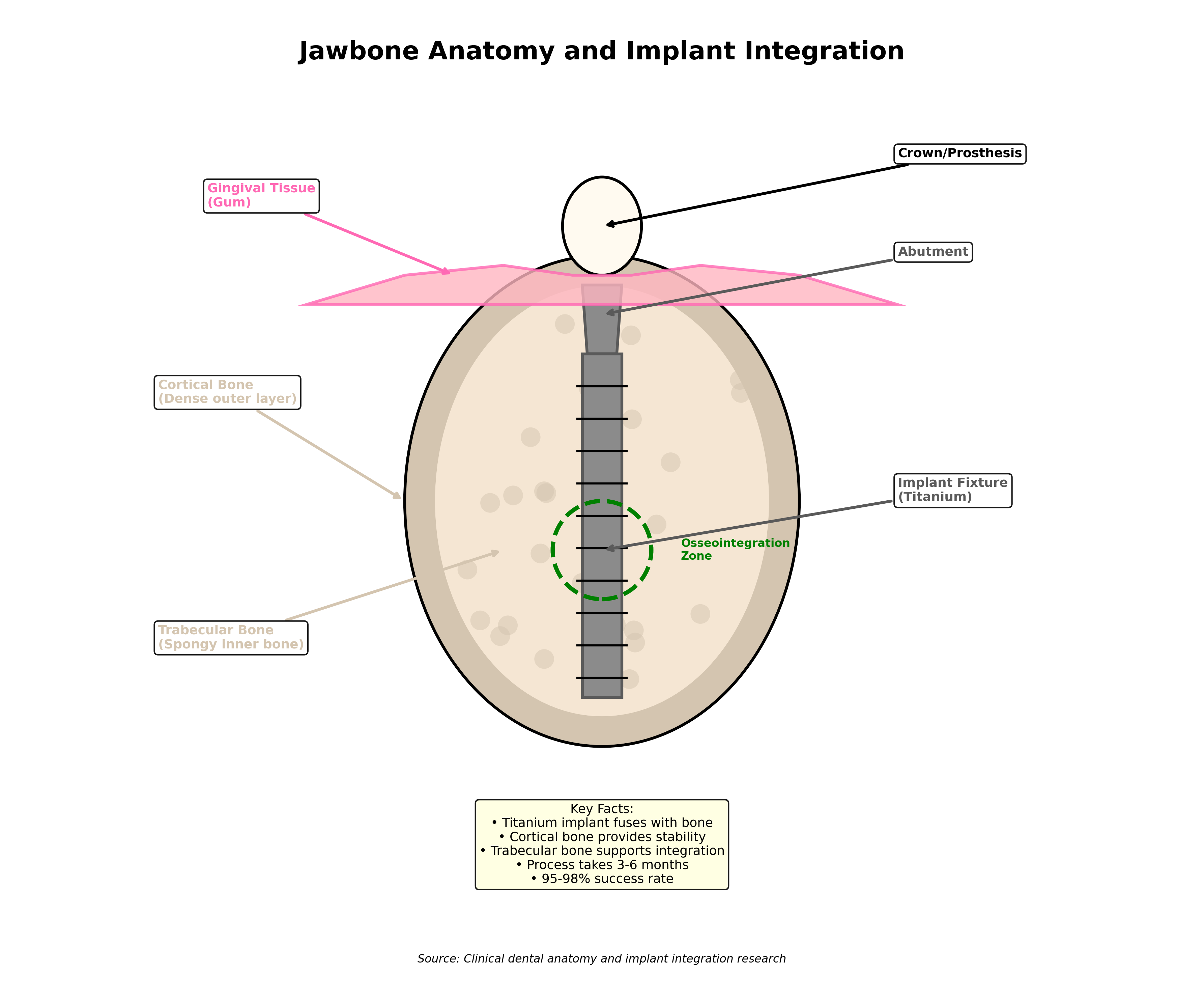
[DIAGRAM: Full-Arch Implant Components - Labeled illustration showing implants, abutments, and prosthesis]
[IMAGE: Before and After Transformation - Side-by-side comparison showing patient transformation]
[CHART: Quality of Life Improvements - Visual representation of improvements in masticatory comfort (80%+), aesthetics (90%+), speech (85%+), and overall quality of life (95%+)]
[TABLE: Full-Arch Implants vs. Traditional Dentures Comparison - Comprehensive comparison of stability, bone preservation, dietary restrictions, maintenance, longevity, and satisfaction]
Module 1 Complete Continue to Module 2: All-on-4 and All-on-6 Techniques Explained